Showing posts with label vegetables. Show all posts

Wednesday, 28 August 2019

Summer's End - August 2019


Summer's End


As July proved to be a month of contrasts, so the unpredictable weather continued throughout August. Rain aplenty and a couple of miniature heatwaves!
The end of summer always seems to roll around quite unexpectedly as we're left to slowly mourn the loss of the warmer weather and vibrant colours of the garden.

On the south side of the stableyard, there is a passage which leads towards the fields beyond. In years gone by, people could walk through the gate and into this land. However, escaping livestock rendered the need for a wire fence to be erected around the perimeter - blocking the gateway in the process. A new gate was installed last year to replace the existing perished one, but the entrance was still blocked by the wire.

Only now has there been a suitable opportunity to remedy this. Giles set me to work digging four (deep!) holes in which to install huge wooden poles. Two of these would be installed next to the wall, and the others adjacent to provide a passage between the wire fence and the gate. The holes were dug and the following week, the poles installed - ready for the fencing to be altered.

Before...


After

The earth was tough to break through and I was glad of the offer of help from Alan who helped me to finish off the holes to Giles' satisfaction.

Elsewhere, the grass was being cut - in and around the garden - and the meadow in front of the house was having its annual trim - a big job! Whereas last year, the dry weather had made this job much easier, this years' wetter weather made the grass harder to cut and more effort was required to rake it too.

I joined the effort in the afternoon, raking the damp grass into piles and taking it away to the woods in the dumper truck.


Although they are fading now, many of the garden's most vibrant summer hues were seen in August, with Antirrhinums and Agapanthus adding colour and form. 


Agapanthus
Antirrhinum

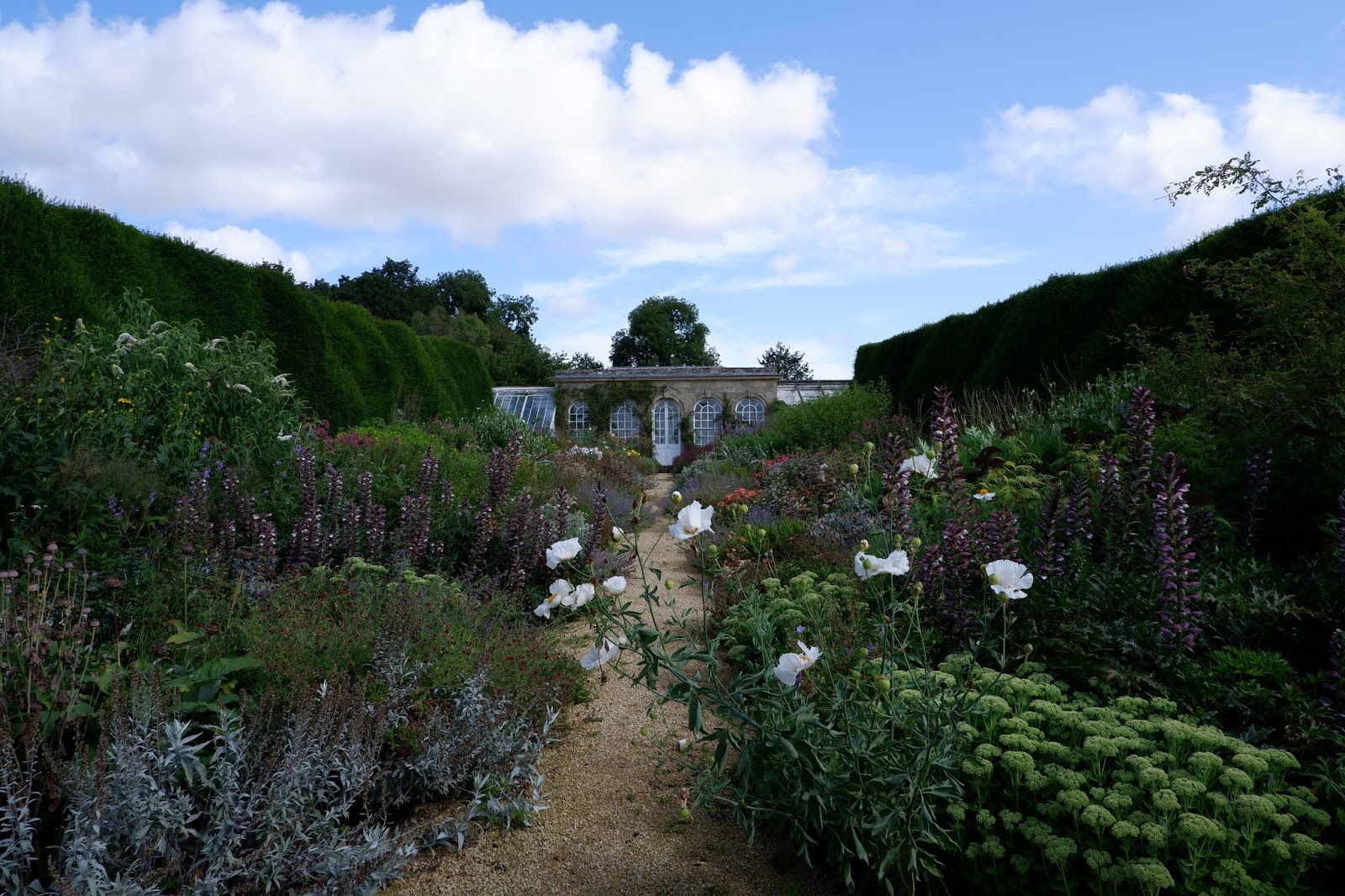
The main border overflowed with plant life - more subtle tones now on display. 'Bears Breeches' (Acanthus) are a particular favourite of mine at this time of year - with its towering structure in purples and greens - its leaves smooth and spiky.
Acanthus can be seen in the middle of each border


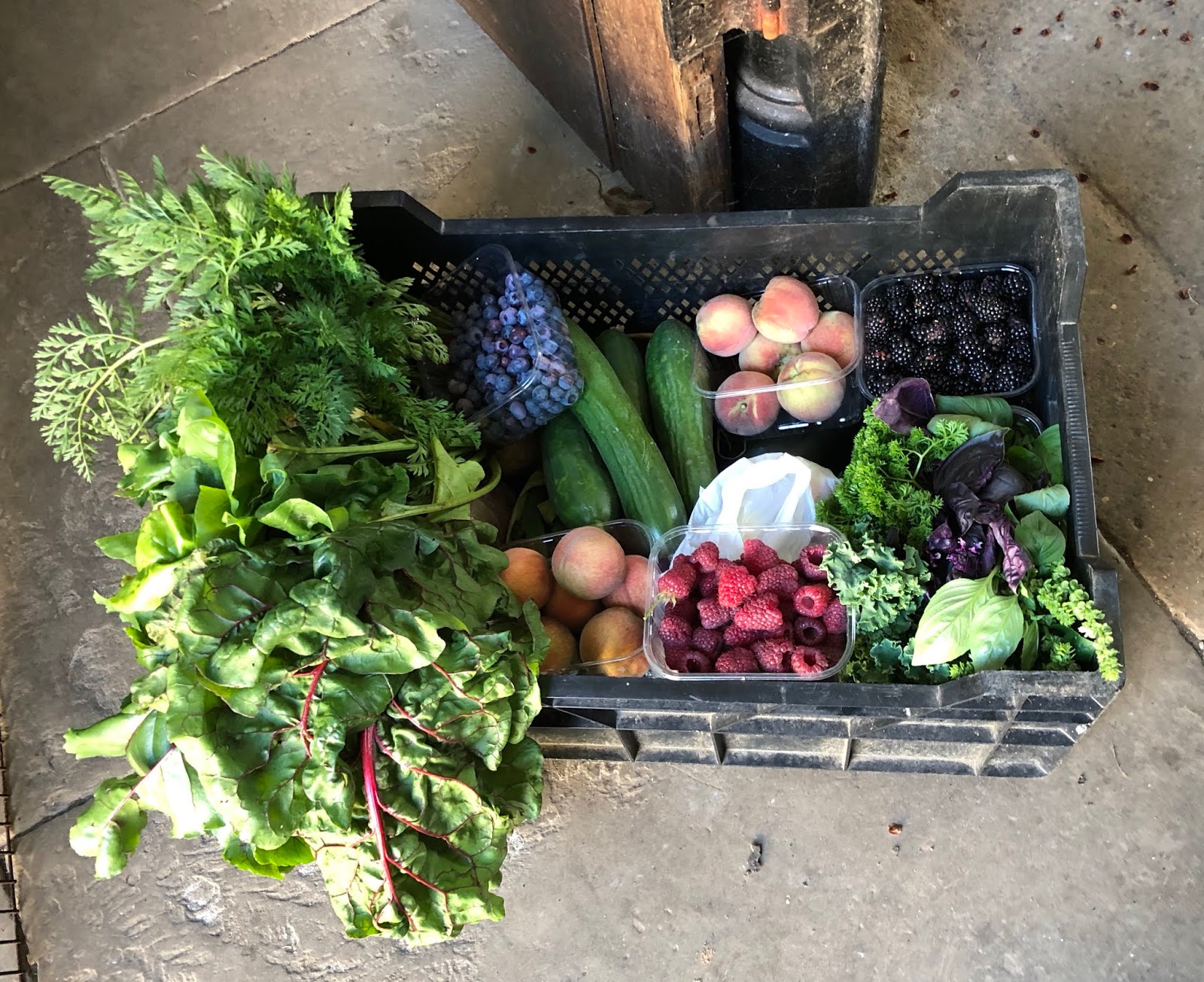
Fruit and vegetables continued to be harvested throughout August, with a particularly varied basket of goods being put together to take to the house.
But as the summer raspberries and loganberries bore their last fruit, it was time to cut back dying plants before tying in new growth. It is a satisfying (but prickly) job!


And as August progressed, the focus shifted towards cutting back, with bushes being pruned and annuals being uplifted.

As the cooler months progress, so there will be more opportunities to develop the garden further for next season. In September, we all look forward to Apple picking and juicing! 

Saturday, 20 July 2019

Colour and Form - Norton Conyers, June 2019


June at Norton Conyers began with a fanfare of colour. Having been ‘split’ two years ago, expectations were high for the irises. And they bloomed in florid abundance.
The timing was perfect too - with the gardens opening for the National Garden Scheme on June 2nd; visitors enjoyed them at their very best.


The June British weather was kinder on the garden this year. Mid June 2018 marked the beginning of a long summer heatwave; it will last long in the memory for many. However, so far in summer 2019, the weather has struck a kind, nurturing balance – a mix of coolness and warmth; clarity and cloud; sunshine and rain. Unremarkable, yet generally pleasant weather by all counts. 

Whilst mowing was brought to a halt for a number of weeks last year due to the dry ground and slow grass growth, so far this year the lawnmower has not been out of action. A weekly trim has been necessary to keep the lush, verdant grass tidy and neat. So, it’s taken up much of my time this month!


But, as the summer months progress, the fruit and vegetable gardens demand increasing attention. With potatoes, onions and peas among the vegetables already planted at the beginning of June, the rest of the vegetable plot needed preparing – earth weeding and turning. 


Preparing the vegetable borders

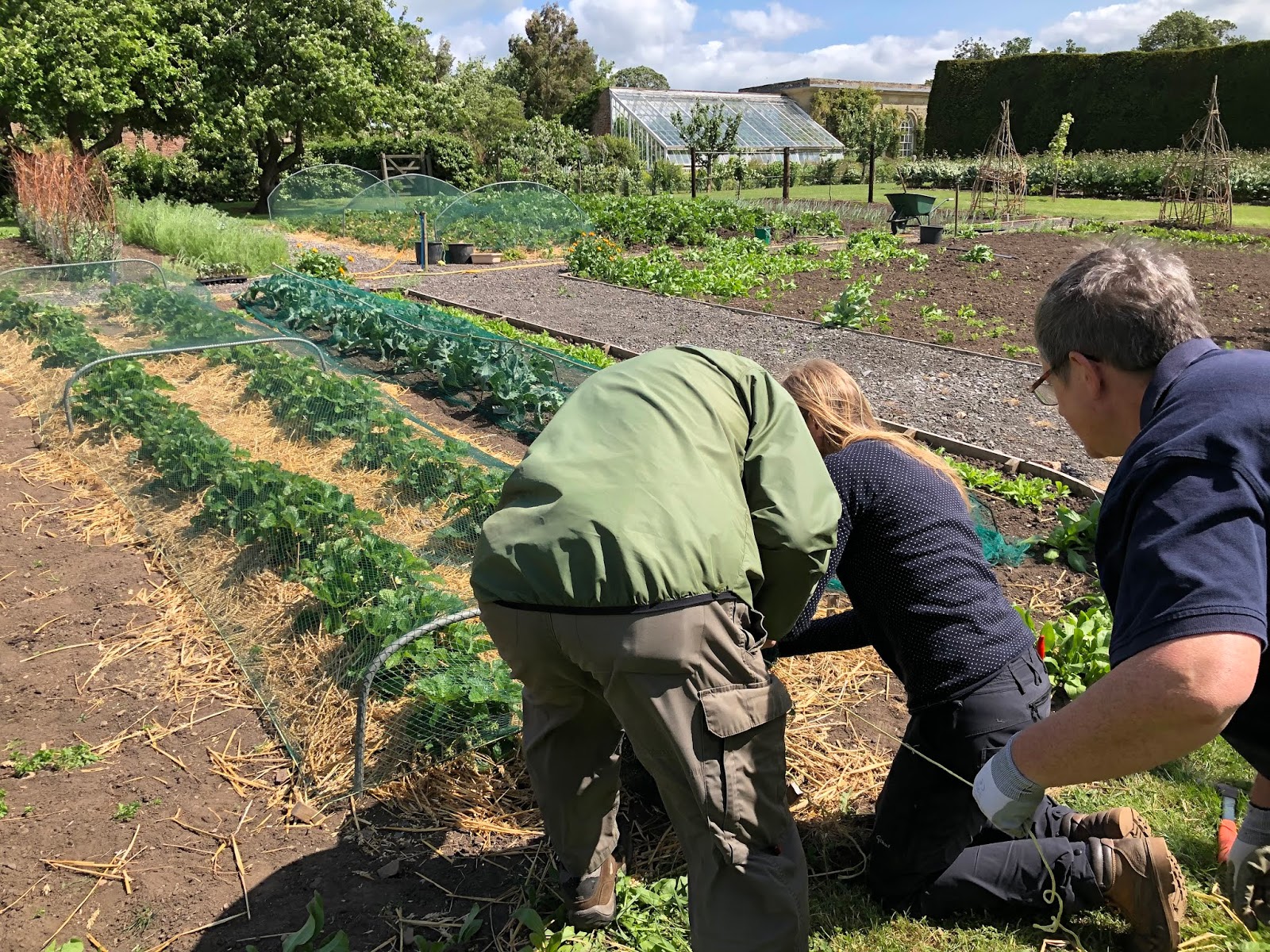
And with the strawberry plants beginning to bear fruit, nets were placed over them. It was a windy day to do so!

Installing nets over the strawberries - 'a job that should only take a few minutes...'

Supports were raised carefully over peas and broad beans – an intricate undertaking.


Elsewhere in the vegetable gardens, African marigolds were in bloom – their simple structures studding the borders with vibrant colour (and attracting pollinating insects in the process!)

Marigolds

Nigella flowers are a personal highlight. The flower's shape and structure is beautiful in its intricate detail; with multi-layered petals and curled stamen, they appear as intricate pastel blue fireworks.

Nigella


Elsewhere, berries were filling out and emerging from their camouflage, with redcurrants making the gradual change from green to pink; pink to rose; rose to ruby.

Ripening Redcurrants

Poppies and paeonies made their presence known in the garden, with pastel pinks and reds; poppies, with their tissue paper petals, and paeonies opening with wavy, sea anemone centres.
Poppy (Papaveroideae)

Paeony (Paeonia)


A particular species of foxglove captured my attention. With snow white, velvet pocket petals, lined with flecked magenta, buds unravelled, as though in construction of an ivory tower.

Foxgloves (digitalis)


In the greenhouse, the perfect culinary partners – tomatoes and basil were beginning to grow.

Basil and tomatoes (growing against the wall)

*

Whilst much of my Monday mornings were spent mowing, in the afternoons I was often sent to the lakeside with the strimmer to attack Himalayan balsam (Impatiens glandulifera) - also known as 'Jumping Jacks'. The distinctive, tall plant - with its explosive seed pods and pink flowers - is an invasive species. Introduced to the UK in 1839, if not controlled, the plant can spread prolifically and smother other vegetation. With new trees planted earlier in the year, this problem plant needed controlling. 

Himalayan balsam (Impatiens glandulifera)

Strimming back the balsam before the seed pods have the chance to mature stops the plant from spreading further. However, there was lots of it to tackle! By the end of June, Giles and I had cut back thousands of the plants, but there was still more to do.

Giles says that we’ll have to cut back the balsam every year, and that there will be a substantial reduction in the number of plants in just a couple of years. 
We’ll have to return to cut back new shoots of growth later in the year.

*

With glorious colours and extraordinary forms emerging in the gardens, we look forward to the fruits (and vegetables) of our labour ripening for the picking in July. Visitors are welcome to come along and pick their own too! 

The gardens are open 10am-4pm on Mondays and Thursdays throughout the year, and both the House and Gardens open on specific days in August and September.

For more information, visit http://nortonconyers.org.uk/opening.html


Friday, 17 August 2018

The Earth's Bounty - Norton Conyers, July 2018


Varied Fortunes in Adverse Conditions

The parched land at Norton Conyers was finally relieved in mid July. Memories of the summer in 1976 had been very much alive in the public conscience, as records were broken week after week. Unfortunately for the gardener, the weather cannot be changed; adverse conditions can stifle and overwhelm. The lawns yellowed, and whilst some plants struggled between waterings, others flourished despite the arid soil:

Passiflora caerulea (Blue passionflower)
Cherry and apple trees were also resolute and unmoved by the lack of rain; both developed healthy fruit during this period.


The Relief of Rain

On a day in which Alan had spent most of the morning watering the vegetable garden, the rain finally came! He had left for home half an hour previously, and I couldn't help but imagine his exasperation at the sheer irony of this. However, the downpour was brief, so the work wasn't in vain after all. However, it was enough to refresh the still and stagnant air.

This was to be the end of the drought; intermittent spells of rain followed over the coming days, with the occasional storm. And remarkable things started to happen...

*

The speed of the grass' recovery was something to behold. Mowing had been abandoned for six weeks; the small amount of scruffy growth was left to prevent further damage. Colour quickly started to return to the lawns, and a fortnight after the first rain, it was ready for cutting again. Usual working arrangements fell back into place, with strimming and mowing being completed every Thursday.

However, the success of the vegetable garden was the biggest surprise for me. Whilst the vegetables were religiously and thoroughly soaked during the heatwave, I thought the enduring heat may stymie their success. But a bumper crop prevailed - carrots, cauliflowers, onions, peas and beans to name just a few good crops. 

A barrow full of marrows!! 
The speed of growth in the garden after the drought has been difficult to keep up with. A 'barrow full of marrows' was harvested at the beginning of August - a process to be repeated within two weeks! Similarly, cucumbers growing in the greenhouse were remarkably prolific and fast to grow. 
We have also been blessed with bountiful beetroot - some are now the size of footballs!

The produce at Norton Conyers is well used: it is available to purchase in the orangery and boxes of fruit and vegetables are regularly taken up to the house.

A personal favourite recipe is Gennaro Contaldo's Curly Kale Pizza. It may sound rather suspicious, but it is incredibly tasty, with chilli, garlic, tomatoes, capers, olives and nuts providing the base for the kale topping. Norton Conyers' kale was used, and the pizza was enjoyed in our house on two consecutive evenings!

*

This year, Giles planted a variety of salad potato that he has not grown for 40 years; the 'Pink Fir Apple' is an unusually-shaped heritage potato. Blight had started to attack the foliage of a number of the plants; I was tasked with cutting the affected back to the base. Alan and I were to dig up this variety the following week; I was impressed with the flavour and texture of this heritage crop.

Digging up Pink Fir Apples potatoes


Flourishing Willow

At the beginning of August, Giles asked me to cut back the willow hedge adjacent to the greenhouse; I thought back to one of my first days in the garden in early March, where all of the gardeners were involved in pruning and pollarding the previous years' growth. That same hedge had grown with vigour in the intervening months, and now towered above and impeded the pathways to the side. I was struck by the willow's sheer vim and vigour.

Pollarded Willow in March

The same Willow in August


A Time to Reflect

Months of hard work and patience have been rewarded over recent weeks. Whilst work in the gardens never ends, there is a deep sense of satisfaction gained through successfully growing - and harvesting - the earth's bounty.
It is incredible to think of the development of the gardens - both manmade and natural - since I started working at Norton Conyers in February. 

Kevin Woods builders have been on site over the last few weeks; their work consists of restoration and repair - preserving and respecting the past, with a keen eye on posterity.

And this reflects the work in the gardens too - assisting nature, and building on generations of hard work, whilst seeking new opportunities for development and improvement.

Apple trees in March
August


Sunday, 15 July 2018

Jewels in an Arid Land - Norton Conyers, Summer 2018


I write in mid July. The record-breaking weather continues; it is the longest and hottest heatwave in the UK since 1976. The country has basked in sunshine, and both sport and weather have dominated the headlines. The weather ran in tandem with the country's growing hopes for the England football team in the World Cup; rain (briefly) came the day after their defeat in the semi-final to Croatia.

Many people are enjoying the novelty of the enduring hot weather. But for the gardener it is a headache and a challenge.

June began warm but unremarkable - Norton Conyers' NGS opening gardens was held on a disappointingly dull day, and we looked set for a typically British summer. Grass was mown every week - a task taking up much of every Thursday - and there was still plenty of other work to be done - hoeing is one of Giles' favourite tasks to delegate.
Driving the tractor for the first time was a particular highlight of mine...

Mowing the lawn outside the house
However, the month progressed with the mercury rising and growing intervals between rain. Much time was spent hoeing the dry topsoil across much of the gardens; weeds are peskily persistent. With large fruit and vegetable plots, and freshly planted borders, watering was the most vital part of our work. Watering in a garden the size of Norton Conyers' takes up a lot of time - especially given the days between work here, where a really good soaking of the earth is required to ensure plants are able to survive in the heat.


The watering paid off - the majority of the plants in the garden have still been able to thrive despite the prolonged heat. There is a remarkably healthy crop of vegetables and fruit, and nothing to suggest the harsh climes in which they have grown.

Cows

Towards the end of June I arrived at Norton Conyers - early as usual to drop my Mum off at work en route - and set out to explore the grounds before Giles opened the garden gates. A relatively cool, but bright and clear start - perfect photographic conditions. I walked towards the house, and then along the external perimeter of the walls. Cows - sometimes heard from inside the gardens - grazed in their herd. I walked along and took pictures of the main border in its summer prime through the gate. I took my time taking shots, but had no sense of what was happening behind me...


I turned - the cows had spotted me and were heading my way in their herd. I stood and took photographs of the creatures as they advanced.  No more than 20ft separated me from them across the ha-ha as they gazed, questioning the reason for my presence - was I a bringer of food?!


Strimming

The day's work began, and I set about hoeing borders. The temperature rose rapidly, and after lunch Giles set me to work with a strimmer on the overgrown land outside the house. Having topped up the fuel and equipped myself with harness, protective helmet and visor, I ambled out of the courtyard and towards the house. Although Alyson had been employed with this task for some time before me, there was still much to keep me busy. In the full sun I soon began to tire. Nettles and goose grass tangled as the base of the machine spun, meaning my efforts were regularly frustrated, and bits of projected debris smarted against my skin. A stop-start job, but one which I managed to finish just in time for lunch; by which time I was hot and achy - my forehead shiny with beads of sweat.
Much more land would be strimmed over the coming weeks, but due to the weather, no one was to be employed doing this job for more than a couple of hours in a single day.


Rosa Iceberg - a favourite of Sir James - outside the Orangery.

Odd-jobs

As the month progressed and dryness began to take hold, the grass - growing at an ever-slowing rate - was left alone. This freed up much time - in other circumstances, time is a luxury to the gardener. But Giles had a declining list of jobs to do given the arid weather. When watering and hoeing were in hand, odd jobs included thinning out pears, weeding around the house and trimming bushes - all worthwhile but not pressing priorities.

Fruit

However, this time would soon be needed as the 'fruits' of our labour were beginning to ripen. I stepped into the peach house in the last week of June - the sweet and intoxicating scent filling the room. The fruits had been thinned out just a few weeks previously, and so I remarked at the fast progress that had been made since then. Given the plethora of ripened fruits, we were able to take some home for ourselves. I baked four in the oven and added cream - divine!

A peach, ripe for the picking
Redcurrants hide themselves amongst the leaves - waiting to be discovered. I had found them a week or so previously - small, white, unappealing. However, on this occasion I found perfectly-formed, glistening ruby jewels. I was struck by nature's enduring tenacity in conditions so unfavourable to life. It's our job as gardeners to assist the natural process, but the relentlessness of the weather could not prevent these plants from producing the largest, reddest currants I had ever seen.

As raspberries and loganberries ripened, along with some of the straggling redcurrants, a glut of fresh fruit was available. I cast my mind back to my first day in the gardens when I helped Giles to install huge wooden supports for the new raspberry plants; on this June day I stood admiring four months of nature's hard work.

Redcurrants hanging like threaded beads

Ripening loganberries
A few coach-parties visited during this period, and we had fruit punnets picked in anticipation; peaches and apple juice ready for purchase.


Arid Land

June turned into July, and - like much of the rest of the country - the effect of weeks of dry, hot weather had yellowed the lawns. The lack of mowing and uneven growth added to the untidiness. This was a shame given the magnificence of the rest of the garden. But there was no practical way of preventing nature's course in this instance. We just had to wait for the rain to come.

Further tractor driving was to come at the beginning of July, as the meadow outside the house was to be mown for the first time in the season. The length of the growth demanded a slow tractor speed - another time-consuming job. I swapped to start clearing up with rake and pitchfork, and several dumper loads of grass were taken into the woods. I was told that the dryness of the grass made this an easier job than in previous years - just as well given the heat! The whole team was involved in this operation, and a convivial atmosphere was enjoyed before lunch.
Alan - dumper commander
Lunch time!


The Vegetable Patch

The vegetable patch is a wonderful sight right now. Earlier this week, huge cauliflowers were picked; I enjoyed some in a home-made vegetarian lasagne today along with peas and courgettes also from the garden. The brassicas sprawl and the onions and beetroots sit proudly in their beds. Not everything has been a success though - our experimentation with Soya plants this year will be chalked up in the 'experience' category (it was largely destroyed by pigeons), and a row of  beetroot didn't grow at all (we think the freshly planted seeds may have been hoed over by mistake...). But overall, we are all delighted with a very healthy crop and another successful year - so far at Norton Conyers - success indeed given the harsh growing conditions. We will enjoy the fat of the land for weeks to come.